At Cologne’s exhibition center on the banks of the Rhine, the eyes of the global game industry converged as gamescom 2026 opened as scheduled. A group of game companies from Chengdu Hi-tech Zone brought both an international-IP remake by a major studio and several new locally created single-player titles. Exhibitors spanned the entire chain, from game R&D, art production, localization services and game media to online technology services. Major studios and independent teams shared the stage, while products and industry services were presented side by side. This move from “taking products overseas” to “coordinated global expansion across the industrial chain” reflects the complete game-industry ecosystem Chengdu Hi-tech Zone has built over years.
A Diverse Lineup
The Entire Industrial Chain Takes the Global Stage Together
As one of the world’s largest game-industry events, gamescom 2026 sold out all exhibition booths, with more than 1,600 exhibitors from 67 countries appearing on the same stage. Under the unified “Tianfu Games” brand, multiple enterprises from Chengdu Hi-tech Zone collectively stepped onto this international stage. It was no longer a case of a few companies fighting alone; instead, upstream and downstream players across the industrial chain set out together to showcase to global markets Chengdu’s overall capabilities in game R&D, technical services and cultural-content exports.
The lineup includes Ubisoft Chengdu, deeply embedded in the global AAA development system; rising local teams focused on original single-player games, such as Ophiuchus Studio, Cangmo Information Technology and Jianmaoxiong Network; and supporting service providers such as Sichuan Language Bridge, which has long specialized in game translation and localization. R&D and creative companies and industry-service providers are going overseas side by side, reflecting the increasingly complete industrial foundation of Chengdu Hi-tech Zone’s game industry.
A Classic Returns
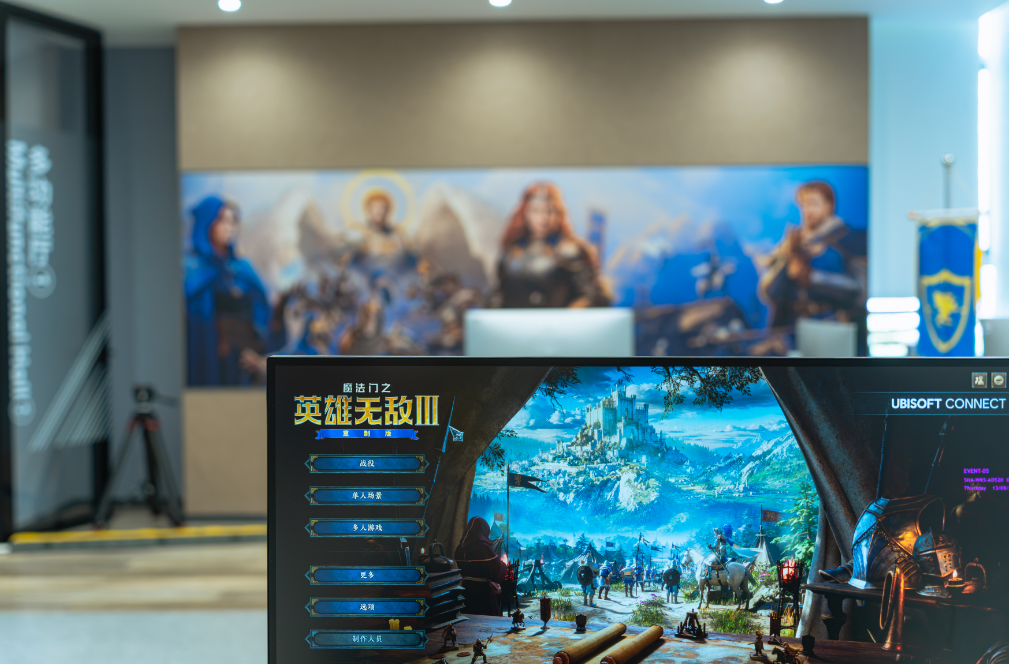
During the livestream segment of gamescom’s opening night, the remake of Heroes of Might and Magic III, jointly led and developed by Ubisoft Chengdu and Ubisoft Shanghai, was officially announced. This classic turn-based strategy IP, first released in 1999, has been rebuilt in full 3D on the Snowdrop engine. It includes the original game and its two expansions, Armageddon’s Blade and The Shadow of Death, and is compatible with thousands of maps created by the player community over the past 25 years. It is expected to launch on multiple platforms in 2027, with full Simplified Chinese subtitles and Chinese voice acting throughout.
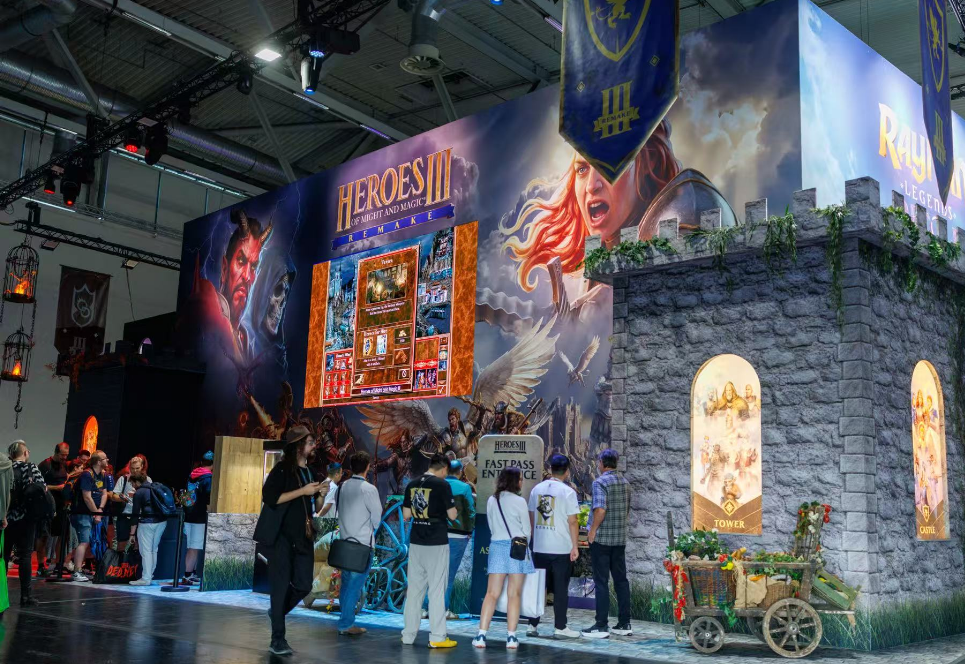
With years of co-development experience on well-known IPs such as Assassin’s Creed, For Honor and Rainbow Six, together with sustained investment in original project development, Ubisoft Chengdu has gradually built mature R&D capabilities and a strong talent system. Entrusting the remake of the classic Heroes of Might and Magic III IP to the Chengdu studio as lead developer also reflects Ubisoft’s recognition of the studio’s long-term accumulation and R&D strength.
Chinese-Inspired Originals Take the Stage
If Ubisoft Chengdu represents a local team participating in the reshaping of a global IP, a group of local original studios are taking works rooted in Chinese culture to the international stage.
Tides of Annihilation, developed by the Eclipse Glow Games team under Ophiuchus Studio, was nominated for the “Most Epic Project” award at this year’s exhibition. This fantasy action game, which incorporates the legends of King Arthur, is coming to PS5, Xbox Series X|S and PC. According to reports, the gameplay demo of Tides of Annihilation has surpassed 6.2 million views.
Cangmo Information Technology brought the wuxia ARPG A Whisper of Fall: Jinyiwei, which combines sandbox exploration, wuxia action and space-time deduction puzzles. Its project trailer surpassed one million views within six hours of release, seeking to tell overseas audiences a jianghu story from ancient China.
Jianmaoxiong Network’s Gong’s Sword: White Ape Awakening draws on the ancient Chinese legend of the “Yue Maiden’s Sword,” incorporates the folk aesthetics of Sichuan and Shu, and features an original dodge-and-counterattack combat mechanic. It is already available on Steam and attracted considerable attention and praise from overseas players at gamescom.
Beyond the console and single-player segment, the NetEase team based at Tianfu Long Island Digital Cultural and Creative Park brought its new extraction-shooter x MOBA title Under the Mist. The development team drew creative inspiration from the lively everyday life of Chengdu’s streets, inviting players to enter the mist with friends and embark on an adventure in search of food and treasure, winning broad attention and anticipation. A relevant team representative said, “We also look forward to using international exhibitions to gather feedback and suggestions from players around the world.”

Beyond gameplay and art, technical adaptation, cultural compliance and localized promotion all determine a game’s fate overseas. Local service providers such as Sichuan Language Bridge take on this behind-the-scenes work, providing translation and dubbing, cultural review and multilingual-version adaptation for games going global. They solve challenges arising from differences in customs and regulations across countries and regions, filling service gaps as Chinese games enter the world.
Behind the bustle of going overseas as a group, the real challenges facing Chinese games abroad should also be recognized. Differences in laws and regulations, religious cultures and user tastes across regions, as well as translation and dubbing, device compatibility testing and localized marketing and promotion, mean that any omission can directly affect a product’s reputation and commercial performance. Many small and medium-sized studios have good creative products but lack overseas channel resources and practical experience in international expansion; funding, talent and information gaps remain real barriers before local teams.
When a product goes global, the contest is not only about the quality of an individual game, but also about an entire industrial supply chain that can be seen and made to work. Building on its current industrial foundation, Chengdu Hi-tech Zone has formed a support system for game companies going global, covering everything from content creation to supporting services, and has also clarified the direction for the next stage of development.
Continue Improving Full-Chain Service Support
Support local institutions such as Sichuan Language Bridge in strengthening their capacity for cultural and creative translation and localization services; rely on courts within the jurisdiction to improve legal services for copyright trade disputes; promote the development of a blockchain-based digital-asset trading platform by the Sichuan Game Innovation Development Center; advance blockchain-based copyright evidence preservation, trading and international anti-piracy efforts in cultural and creative industries; make good use of the Digital Cultural and Creative Master Fund to provide financial support for companies going global; and continue supporting the implementation and development of global esports events, among other measures.
Build a Diversified Matrix of Overseas Distribution Channels
Cultivate and attract key publishing and distribution players; connect with platforms such as Tencent, iQIYI and Alibaba that have already established a presence locally, and bring relevant resources from international platforms to the Zone; continue opening up major overseas distribution channels such as the Apple App Store, Google Play and Steam; implement a support program for taking high-quality original works overseas; regularly hold forums on taking cultural and creative works global; continue organizing enterprises to participate in top international industry exhibitions such as gamescom in Germany and Tokyo Game Show; share practical experience in international expansion through themed exchange sessions; and guide creators in transforming China’s outstanding traditional culture into digital cultural and creative products that global audiences can understand and appreciate.

Photo credit: Tuchong
The growth of an industrial ecosystem cannot be separated from the continuous nourishment of the local soil. Today, Chengdu Hi-tech Zone’s game industry has mature major-studio teams capable of taking on global AAA projects, small and medium-sized studios with original ambitions, and complete supporting players in localization, translation and copyright services, allowing large, medium-sized and small enterprises to grow in synergy. The appearance at gamescom is only one stop on the global journey of “Made in Chengdu Hi-tech Zone” games. Chengdu Hi-tech Zone will continue to improve supporting services and help enterprises refine their products, making the road overseas smoother and broader.
扫一扫在手机打开当前页

3e7d1a182fec4a44b384163937e68f21/images/79ad1f4636004a05b384f46240981d06.png


