In April 2026, the 13th China Network Audio-Visual Conference was held in Chengdu. During the same period, Yuanchuang Island OPC Community in Tianfu Changdao Digital Cultural and Creative Park, Chengdu Hi-tech Zone, officially began operations. As an important part of the “Hi-tech π Cube OPC Community” and its “1+3+N” platform layout, Yuanchuang Island focuses on addressing the high startup costs, limited resources and insufficient collaboration faced by solo entrepreneurs in the AI era, and has introduced a new entrepreneurship incubation model.
Today, at Yuanchuang Island OPC Community, “one-person team” is no longer a conceptual gimmick. It has become a mature production model validated by teams such as Snowie AI, Tianxin Yinhua and S.o.R.Core5 through real user numbers, revenue results and implemented projects.
Although AI technology can greatly unleash individual creative productivity, it cannot solve practical challenges in the startup process, such as obtaining qualifications, securing orders, planning overseas expansion and coordinating commercial activities. Built on Tianfu Changdao’s complete digital cultural and creative industry system, what kind of firsthand example does the pioneering practice of Yuanchuang Island OPC Community offer for incubating and cultivating solo entrepreneurs in China’s digital cultural and creative sector?
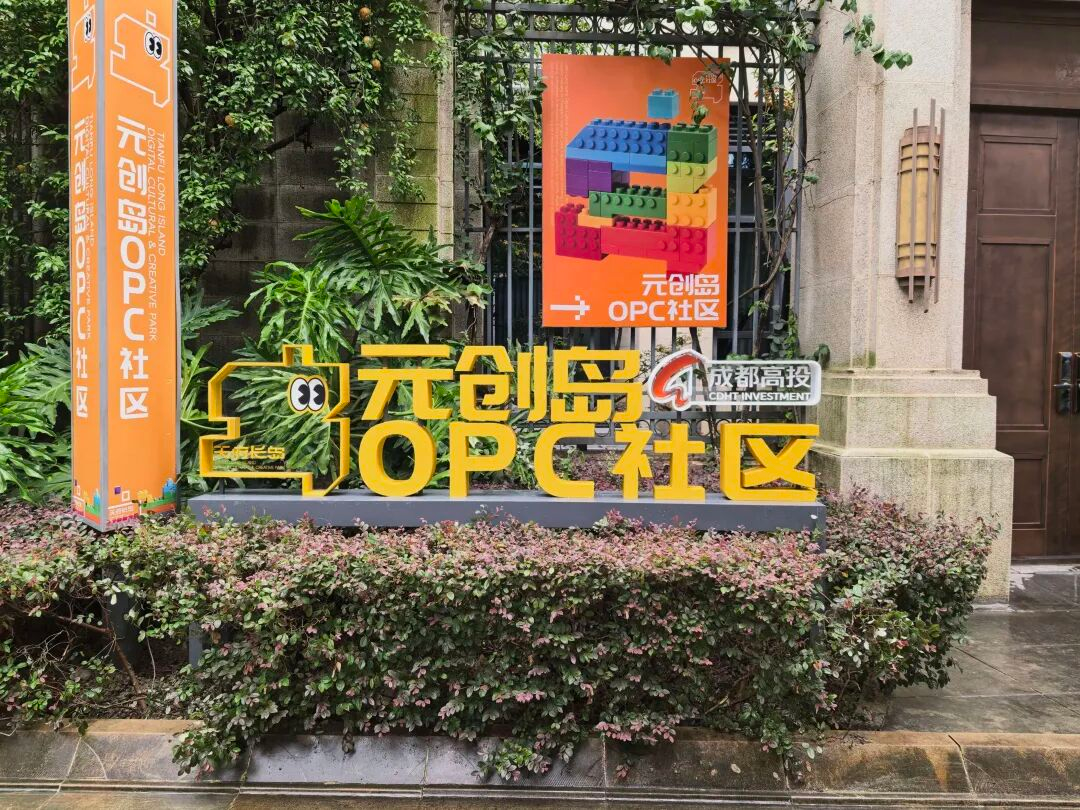
The first phase of Yuanchuang Island OPC Community covers 1,155 square meters. Moving away from the traditional fixed-workstation model, it includes shared collaboration areas, a roadshow and exhibition area, private meeting areas and support service areas. It implements a mechanism under which enterprises register in the community, work in the cloud, and receive services and settle accounts locally. Tencent’s first WorkBuddy OPC Partner Community in China has also been established here.
The community is an entrepreneurship platform centered on seven empowerment systems: trusted digital identities and cluster registration; flexible computing power and intelligent operations support; a distributed resource collaboration network; full-chain localized online services; cross-border promotion and content export; offline mirror spaces; and capital empowerment and joint fund development. To date, the community has attracted 47 OPC enterprises. It plans to bring together more than 100 high-quality OPC entities in 2026 and 2027, with a long-term goal of attracting 500 and cultivating a number of high-growth micro and small enterprises grown from solo ventures.
Snowie AI (Qiu’er Qiu’er):
After Many Pitfalls and Account Bans, Emotion AI’s Overseas Valuation Tops RMB 10 Million
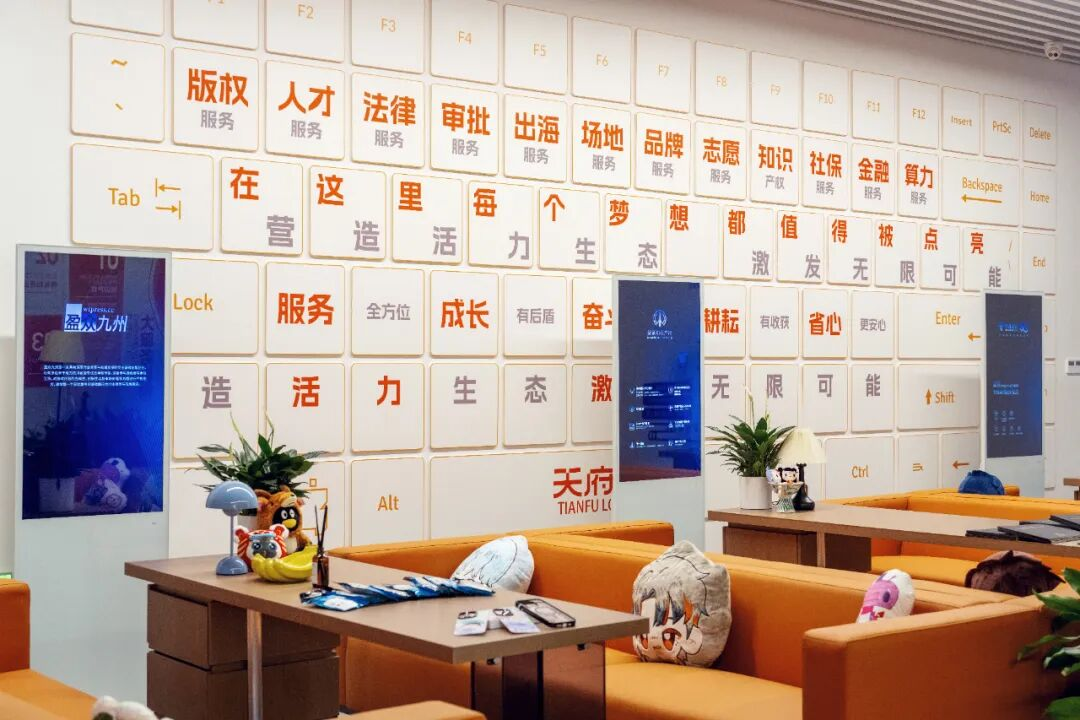
In the shared office area of Yuanchuang Island in Tianfu Changdao Digital Cultural and Creative Park, the Snowie AI (Qiu’er Qiu’er) team is discussing overseas business data. Snowie AI was created by a post-2000s returnee team whose members include graduates of leading universities such as Harvard University and Imperial College London. The team has developed an in-house, low-cost emotional engine with long-term memory that can assess the quality of interpersonal relationships and track emotional states. It positions the product as an “emotional co-pilot” for young people. The product has been adapted for multiple platforms in China and abroad, including WeChat, WhatsApp and Telegram.
“We came up with this project while studying overseas. We discussed financing in the United Kingdom, but the investor required the team to establish a local presence there. More than half of the funding would have been consumed by six months of rent alone.” Snowie AI founder Wang Shiqi recalled her decision to return to China to start a business. As a native of Chengdu, she was optimistic about the local ecosystem for pan-entertainment and AIGC, and ultimately based the project at Yuanchuang Island OPC Community.
After moving in, Snowie AI’s product reached 200,000 registered users in China and abroad. It secured more than HKD 1 million in investment from the Hong Kong Science and Technology Park fund and the Hong Kong City Seed Fund, and its valuation exceeded RMB 10 million. It ranked second in Sichuan in the startup support program for overseas students and won second prize in the OPC special division of the Jinji Lake Innovation and Entrepreneurship Competition. It also became a co-incubated enterprise of NVIDIA and Amazon Web Services. The Snowie AI team now operates through a dual-center structure: Chengdu handles domestic business-to-business operations, while its Hong Kong subsidiary serves overseas consumers. Its overseas consumer business has developed a stable cash flow.
“Yuanchuang Island’s ‘Island Friends’ community activities have brought our project practical resource connections. For example, through community salons, we connected with a specialized overseas-expansion service provider and a Belt and Road industry association, which helped us reach short-form drama partners in Southeast Asia. At an early stage, we explored overseas social-media operations. Without practical guidance, more than 20 accounts were banned one after another. We hope the community can systematically provide overseas-expansion training based on a ‘mentoring and knowledge transfer’ model,” Wang Shiqi said.
Speaking about the difficulties faced by the team, Wang Shiqi said that in addition to the challenge of gaining practical experience in overseas marketing and cross-border compliance, rigid requirements for domestic internet-related qualifications were also a serious problem. “ICP and EDI licenses require at least three people to pay social insurance and registered capital of RMB 1 million. Many OPCs have only one or two core members, which directly blocks app launches and online paid services. The OPC model is a natural form of software entrepreneurship, and existing regulatory rules need to keep pace with this emerging business format.”
Tianxin Yinhua:
20 Years of Entrepreneurship Meets OPC, Dramatically Lowering Trial-and-Error Costs
Tianxin Yinhua founder Zhang Kai is an entrepreneur with more than 20 years of experience. His team focuses on film-industry-grade AI film and television creative workflows. Unlike the toy-oriented AIGC tools available on the market, its products provide professional production solutions for enterprises and animation-drama teams. In the six months since joining Yuanchuang Island OPC Community, the team has delivered more than 20 AI products, extended its offering to a multi-account distribution system for cross-border e-commerce, and secured official authorization from the Talent Exchange Center of the Ministry of Industry and Information Technology to provide AI training. Its monthly revenue has remained stable at around RMB 100,000.
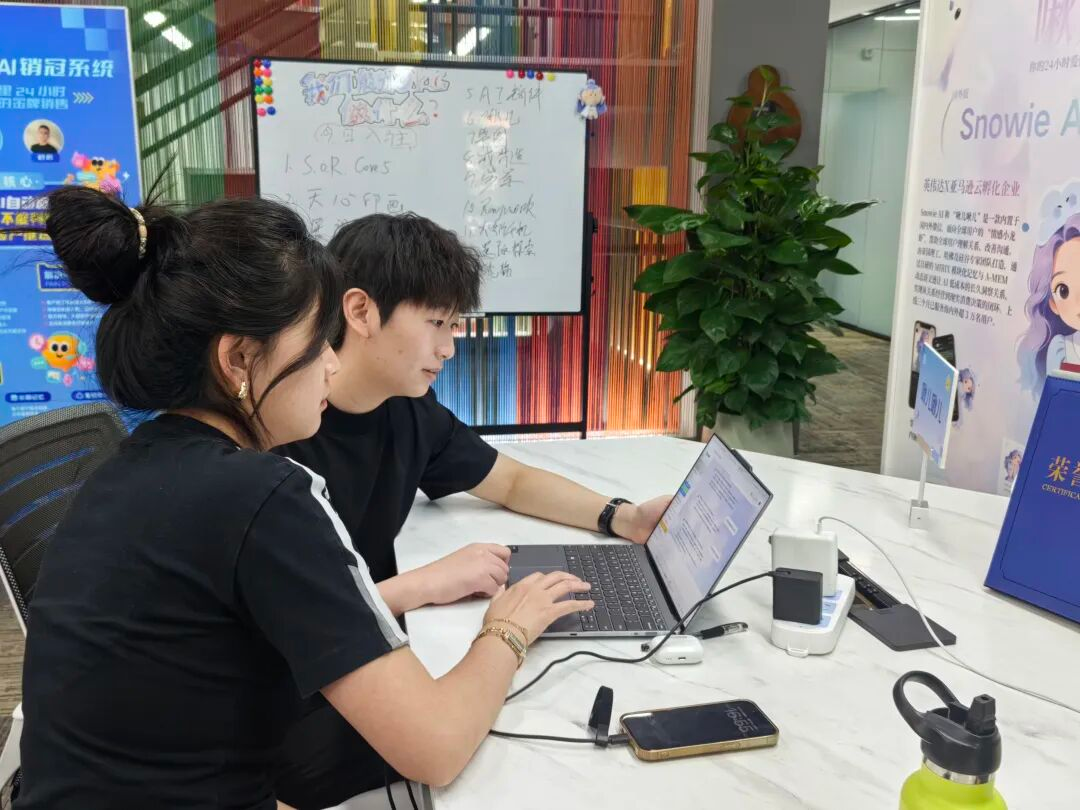
Sitting at an open workstation in Yuanchuang Island Community, Zhang Kai did the math: “In the past, refining a product prototype required an investment of RMB 30,000 to 50,000 and took three months. Now, with the help of AI tools, one person can produce a product prototype in a week, reducing the cost of trial and error to just a few hundred yuan. This is the most direct change brought by the OPC model.”
“At the regular ‘Island Friends’ salons held in the park, we met OPC partners producing animation dramas for overseas markets. We empowered them with our AI production tools, while they used frontline production scenarios to refine and iterate our products. Together, we co-created the ‘Tianxin Yimeng’ product and jointly developed AI industry training materials,” Zhang Kai said.
AI has greatly increased productivity, but Zhang Kai does not see OPC as a “safe harbor” for entrepreneurship. “OPC is simply one state of entrepreneurship. Of 100 startup projects, perhaps only one will survive, so the founder’s mindset is crucial.” He also pointed out a weakness in current community collaboration: “A mature mechanism by which the community takes orders and subcontracts them to different OPCs for coordinated delivery has not yet been established. Everyone has their own strengths, but standardized mechanisms for order circulation, delivery supervision and benefit distribution are lacking, making it difficult to turn social relationships into stable business cooperation.”
S.o.R.Core5:
Education OPCs Grow Slowly; the Community Serves as a “Trust Amplifier”
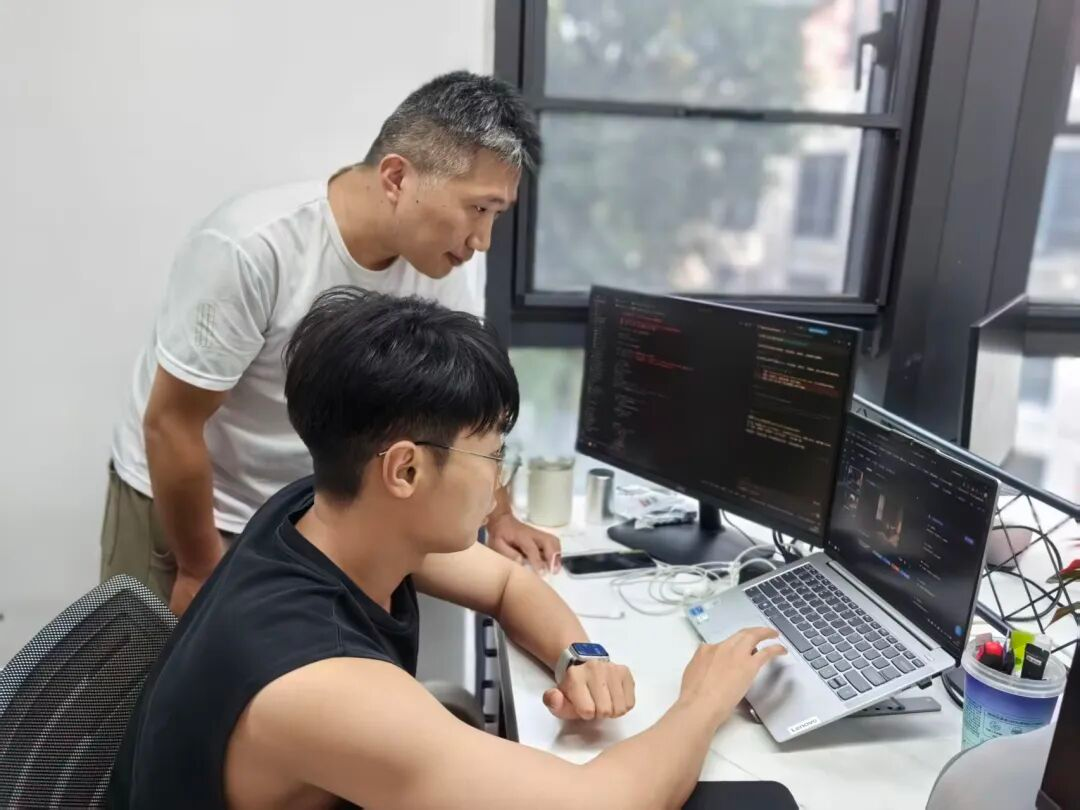
S.o.R.Core5 has introduced the S.o.R. scientific reading system to China and developed AI-powered learning-condition diagnostics and teacher lesson-preparation tools. It has now served several thousand frontline teachers in China and built a niche following of more than 50,000, working to shift English teaching from exam preparation toward literacy-based reading. “Capital is not interested in the education track, while small teams cannot afford to burn cash. The OPC model of a ‘core small team plus AI amplification’ is a perfect fit for this field,” explained the project lead. With AI tools, a small number of education-research experts can multiply their output several times and serve large numbers of frontline teachers. S.o.R.Core5 has reached cooperation agreements with several primary and secondary schools to refine learning-profile maps, graded-reading library models and other products.
“We do not treat the park community as a sales channel for directly finding procurement orders. Its greater value is as a trust amplifier. During salon discussions, entrepreneurs in the digital culture and creative and culture-and-tourism sectors learn about our project and then introduce us to principals and heads of education and training institutions through their own social circles. This indirect recommendation based on community trust is more efficient than cold visits,” Zhang Kai said.
The discounted computing power provided by Yuanchuang Island OPC Community offers a low-cost computing foundation for model training and question-bank calibration. But education OPCs face equally prominent practical challenges: “The education industry has a long customer-acquisition path and results come slowly. Computing support is helpful, but the real bottleneck is understanding the cognitive patterns of students in China, something AI cannot replace.” The team also hopes to work with film and television OPCs in the park in the future to use AI to generate story-based reading animations and open up a new “education plus digital content” chain. However, cross-OPC project cooperation remains an idea at this stage, without supporting mechanisms to bring it to fruition.
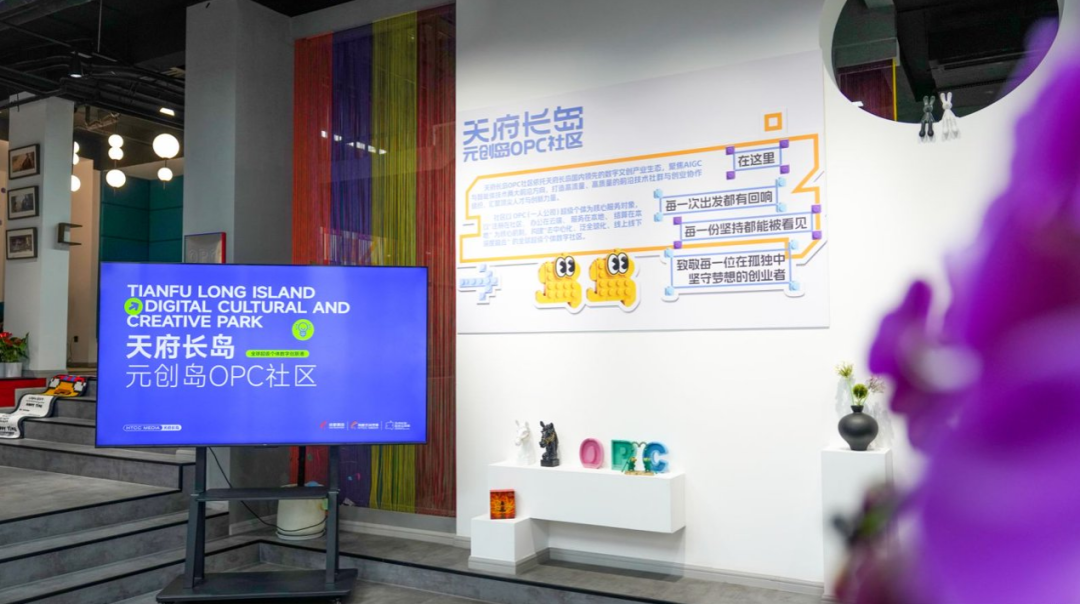
The three OPCs, from entirely different sectors, have achieved a great deal over the past six months, yet they share similar pain points and bottlenecks: internet-related qualifications do not match the OPC asset-light model; overseas expansion lacks practical training; OPCs in the community engage socially more often than they collaborate in real business; and the difficulty of acquiring customers varies greatly across sectors. These are also the challenges and bottlenecks facing OPC entrepreneurs that the community has identified.
Against this backdrop, the focus of Yuanchuang Island’s development is shifting from “building a space” to “improving mechanisms.” It will continue to deepen empowerment through the WorkBuddy intelligent technology platform and the supply of inclusive computing power; work with leading enterprises and state-owned resources in Tianfu Changdao to build an order pool; explore a model in which the community takes orders centrally and OPCs fulfill them through subcontracting; focus on overseas business; and add more cross-border expansion training. At the same time, it will continue to hold branded activities such as “Island Friends” and “Island Friends’ Record,” turning social connections into business cooperation; track domestic pilot experience with OPC qualifications in real time and convey the practical needs of the new business format to higher authorities; and work with universities in Sichuan to use OPC business projects as practical training topics and cultivate a larger pool of relevant talent.
As an important part of the “Hi-tech π Cube OPC Community” and the broader digital cultural and creative “rainforest,” Yuanchuang Island OPC Community does more than provide office space. It serves as a complete industrial service hub and a capability amplifier for solo entrepreneurs by packaging and supplying resource-intensive services such as computing power, government affairs, copyright, overseas expansion, investment and financing. This allows entrepreneurs to focus their limited energy on product innovation itself instead of spending large amounts of time on administration and technical infrastructure.
At the same time, the community continues to iterate its support in computing power, scenarios, capital and the ecosystem. Built on Chengdu Hi-tech Zone’s mature digital cultural and creative industry foundation worth hundreds of billions of yuan, Yuanchuang Island OPC Community in Tianfu Changdao is exploring a replicable path for cultivating solo entrepreneurs nationwide. It is continuously incubating new quality productive forces and injecting individual-driven innovation into the high-quality development of Chengdu Hi-tech Zone’s digital cultural and creative industry.
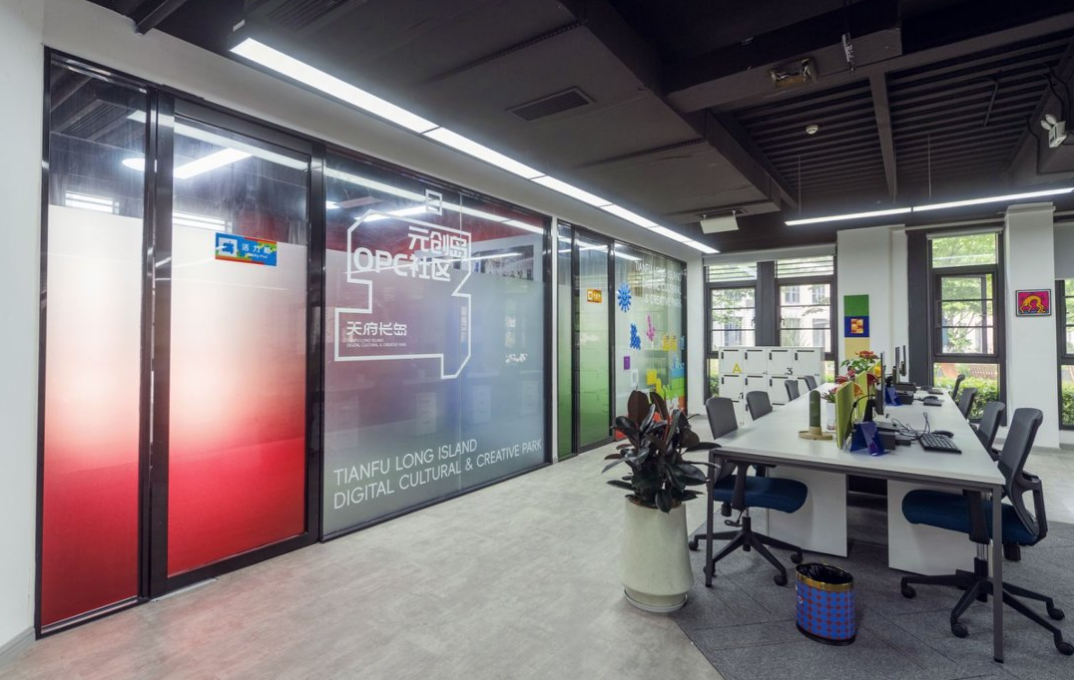
Next, Chengdu Hi-tech Zone will use Yuanchuang Island OPC Community in Tianfu Changdao Digital Cultural and Creative Park as a model, deepen the development of the “Hi-tech π Cube OPC Community,” strengthen infrastructure such as the WorkBuddy intelligent-agent platform and inclusive computing power in the park, and ensure that the seven empowerment systems are implemented precisely. It will also continue to advance the “Visit, Understand, Help and Promote” initiative, work with multiple departments to provide regular compliance guidance and answers for digital cultural and creative OPCs in response to enterprise pain points, deepen the integration of industry and education with universities in Sichuan, attract high-quality solo entrepreneurs from across the country through talent-recruitment competitions, and improve the OPC business ecosystem in the digital cultural and creative sector.
扫一扫在手机打开当前页

48970978621f45329d1e8e2060b37a9a/images/0d7f2e06987f441e8d63d5eae541f51a.png


