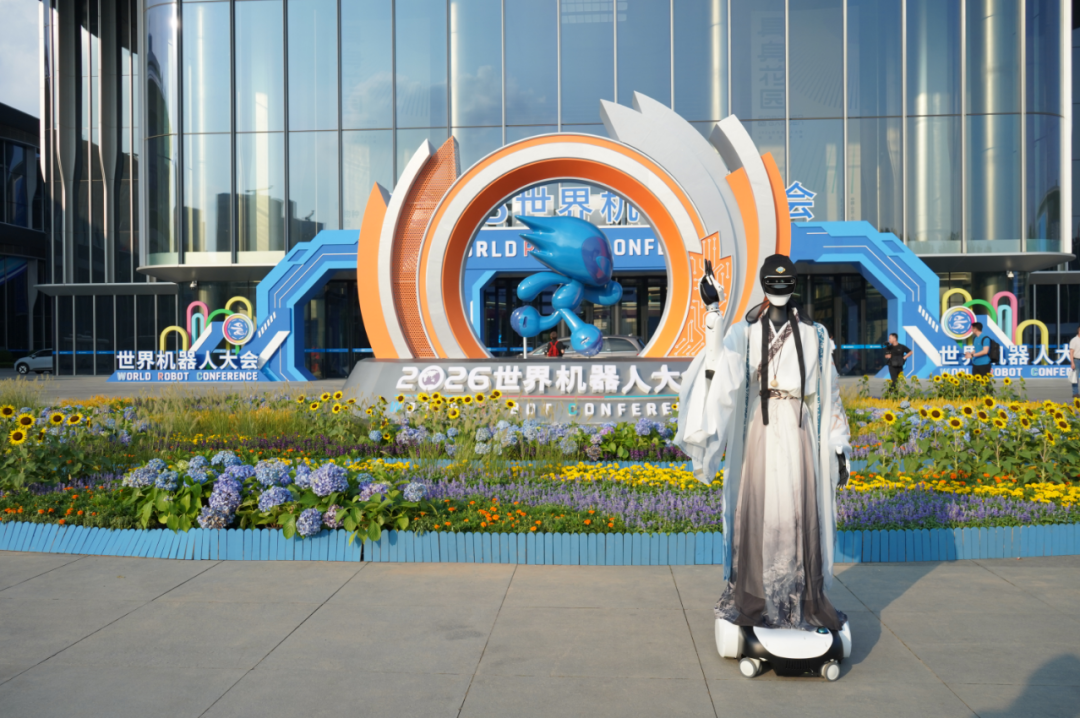
On August 19, the 2026 World Robot Conference (WRC) opened in Beijing’s Yizhuang area. The venue was crowded as robotic arms and humanoid robots of various kinds took turns demonstrating their capabilities. Several enterprises from Chengdu Hi-tech Zone appeared as a group, including Sichuan Embodied Humanoid Robot Technology, Yuefan Innovation, Tianfu Jiangxi Robot Training Center and its incubated enterprises Tianjiang Xinhua, Lean Automation and Yinyu Quwan. Their exhibits covered multiple parts of the industrial chain, including complete robots, training platforms, core components, scenario applications and consumer-grade AI.
AIQ Officially Goes on Sale
Bringing Commercial Robots into a Track that “Understands You”
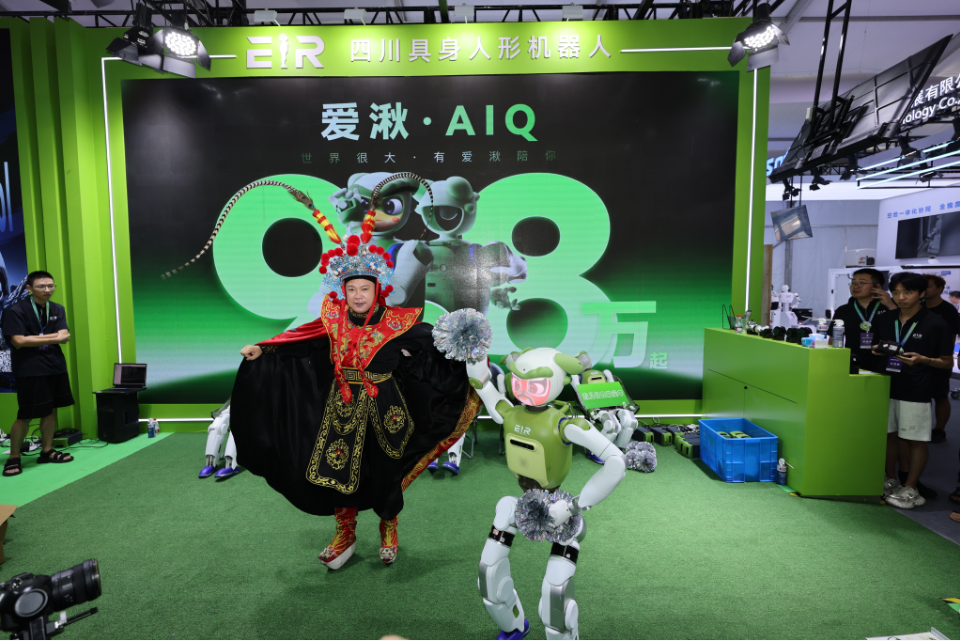
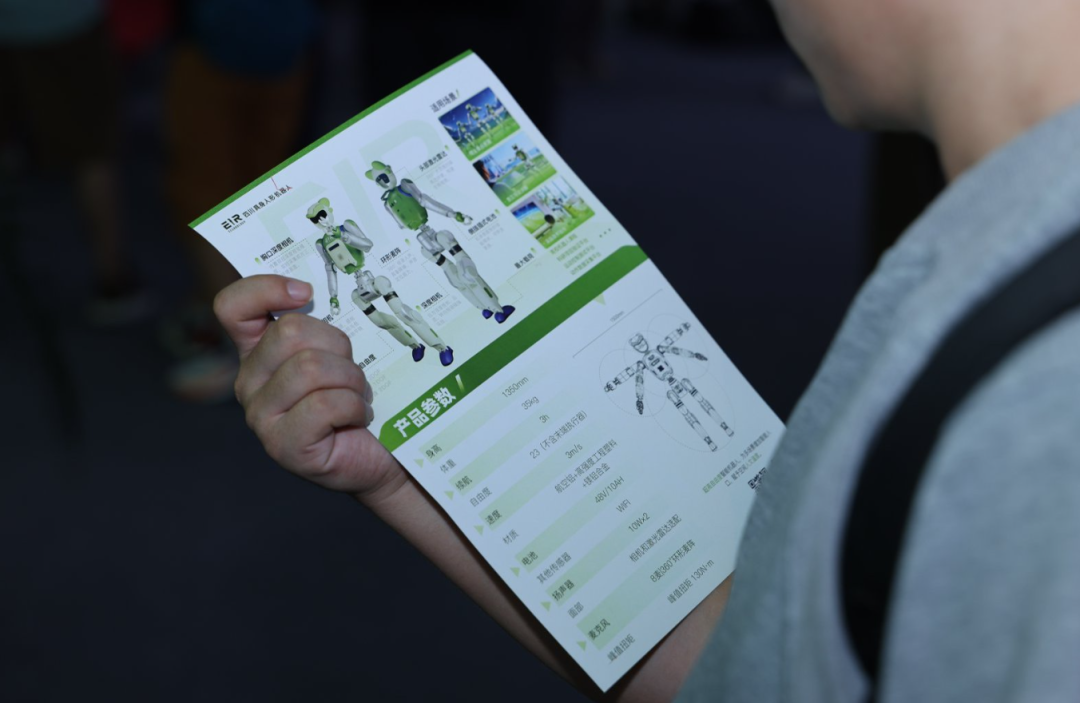
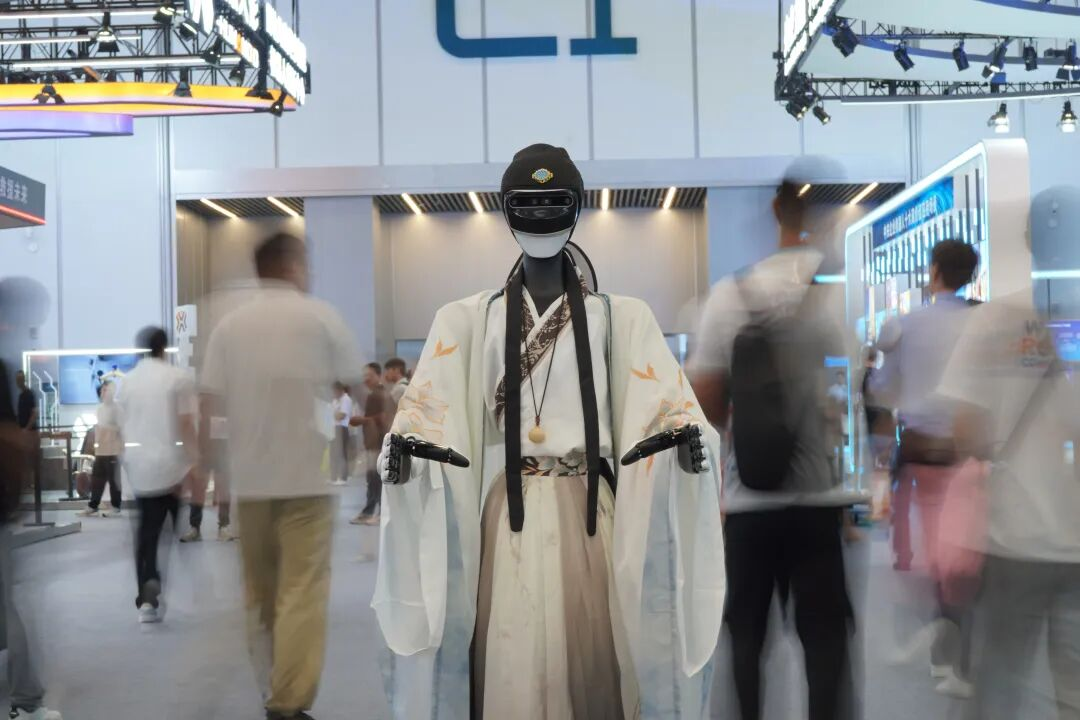
“Hello, everyone. I am AIQ. I am officially on sale today!” On the opening day of the conference, Sichuan Embodied Humanoid Robot Technology Co., Ltd. (EIR), a leading embodied-intelligence enterprise in southwest China, announced at booths D203/C131 that its new-generation emotional-interaction humanoid robot AIQ had officially gone on sale. It launched two product lines, an interaction version and a motion-control version, starting at RMB 98,000. Following multiple rounds of scenario testing, this was AIQ’s first time entering the market as a mass-produced product, taking the humanoid robot focused on emotional interaction down from the concept display and onto the market.
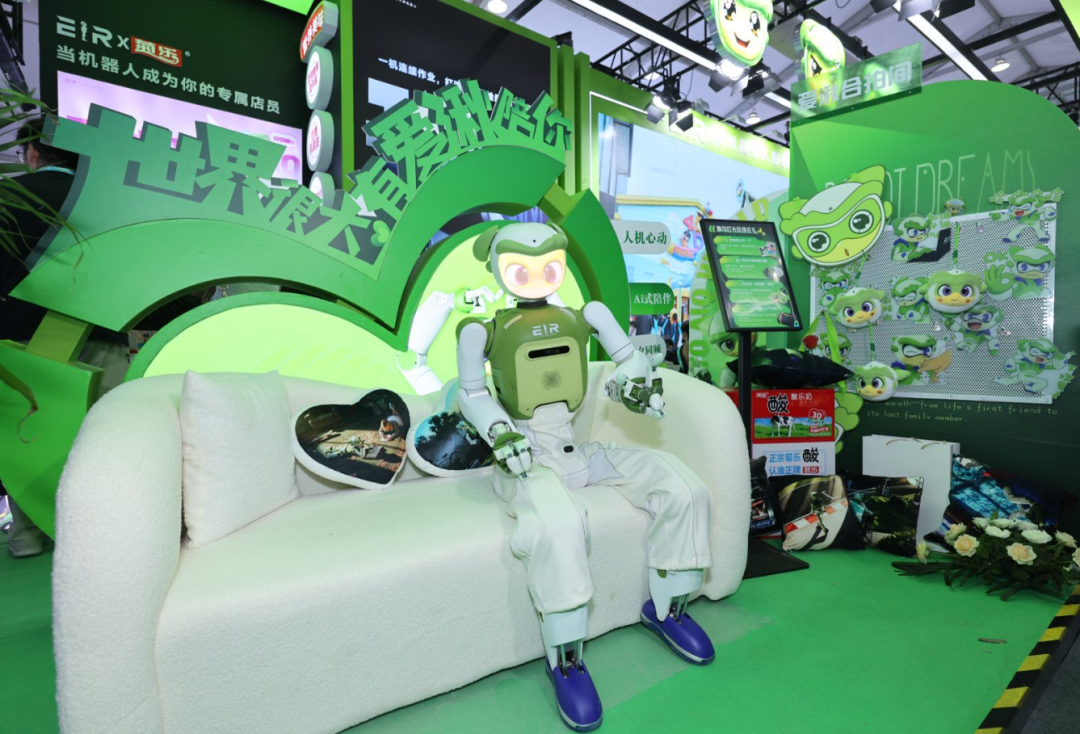
According to Cheng Qingmiao of Sichuan Embodied, the new-generation AIQ has undergone systematic upgrades in lightweight design, modularity, reliability and mass-production capability. Its overall structure, interface design, internal layout and safety protection have been further optimized, while the product has evolved from a standalone robot into a more mature and extensible humanoid-robot platform.
In terms of intelligent capabilities, EIR has made interaction intelligence AIQ’s core differentiator. Built on its self-developed ELA Harness architecture, AIQ can combine multimodal perception, memory, role understanding and task collaboration, and quickly switch its knowledge, roles and service capabilities according to different scenarios, enabling the same robot to adapt to a range of service scenarios in finance, exhibition venues, culture and tourism, and other fields.
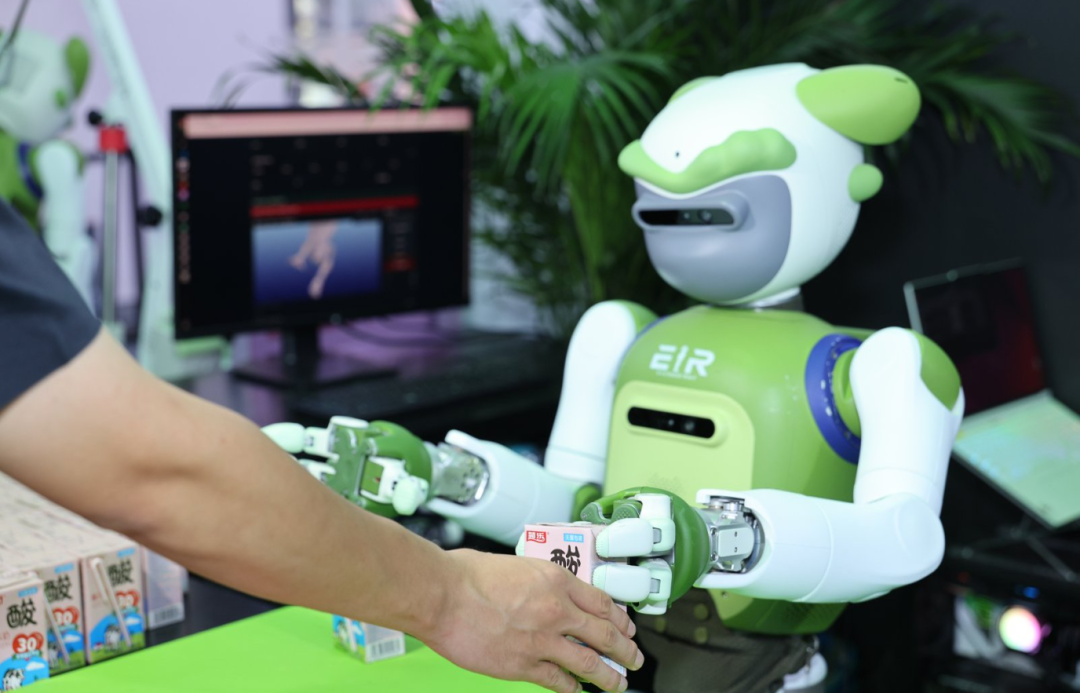
Feng Zhenyu, CEO of Sichuan Embodied Technology, said, “Humanoid robots must not only know how to move; they must also understand people. The endpoint of technology is not to show off technical capabilities, but to stay close to the needs of real life. The real world does not provide robots with fixed scripts. Visitors interrupt conversations and tasks change unexpectedly — these are everyday situations. This system teaches robots to adapt to changing circumstances.”
Relying on the Sichuan Humanoid Robot Training Field, Sichuan Embodied Technology continuously feeds anonymized real-robot data collected in real-world scenarios back into its models, creating a data flywheel of “real robots enter scenarios — generate data — improve models — improve products — reach more scenarios.” Alongside the interaction version, it also showcased a motion-control version for research institutions. The company also exhibited the industrial-grade wheeled-legged quadruped robot Tianxun and the full-size humanoid robot Skywalker. Tianxun is undaunted by complex road conditions and can conduct inspection operations in utility tunnels and power stations. The company’s products have reportedly attracted widespread attention and received expressions of interest from multiple customers and partners in China and abroad.
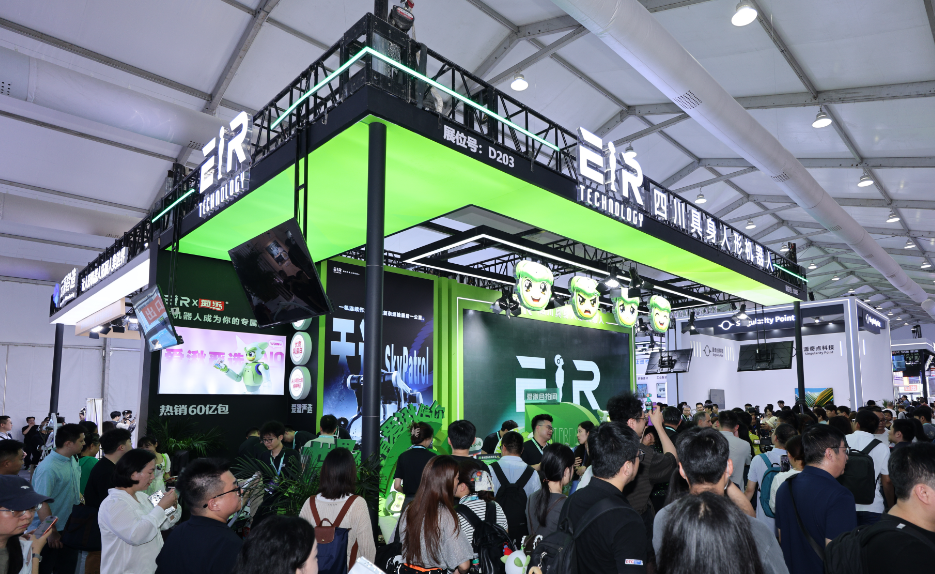
Sichuan Embodied is currently stepping up preparations for the World Humanoid Robot Games. As the only local robot enterprise from Sichuan to compete, it will participate in events including the opening ceremony, cheerleading and the 100-meter race.
From Servo Systems to Culture and Tourism
Breakthroughs across Multiple Lines: Core Components, Last-Mile Logistics and AI Toys
Hard-core capabilities at the foundation determine the industrial base, while commercial validation in real-world scenarios defines the future of an industry. If humanoid robots are the stars under the spotlight, components, logistics robots, training platforms and consumer AI are the “backstage crew” supporting the entire industry. The participating enterprises from Chengdu Hi-tech Zone offered answers in their respective fields.
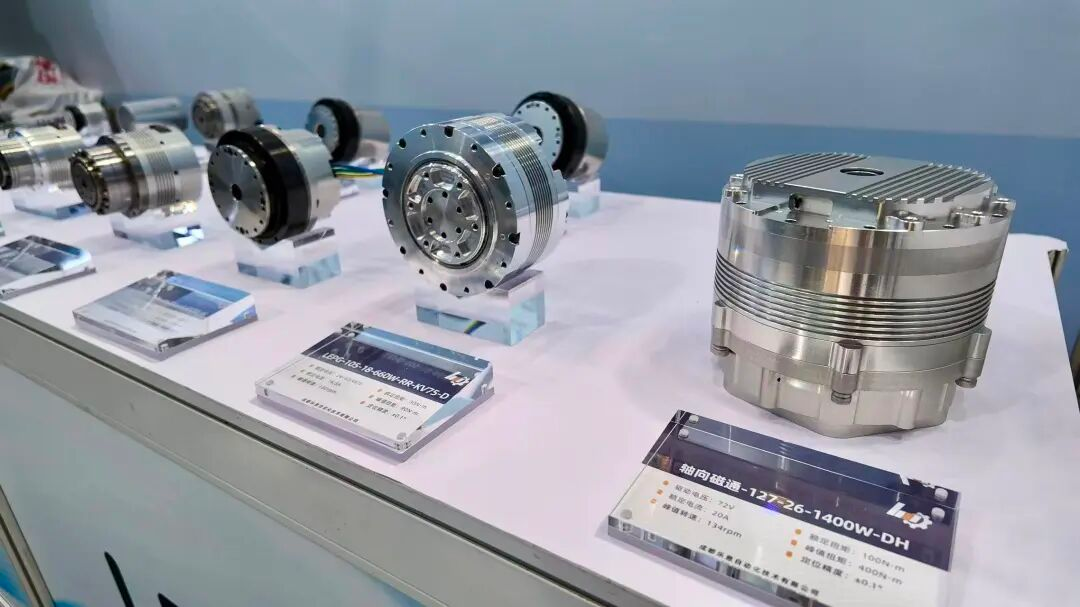
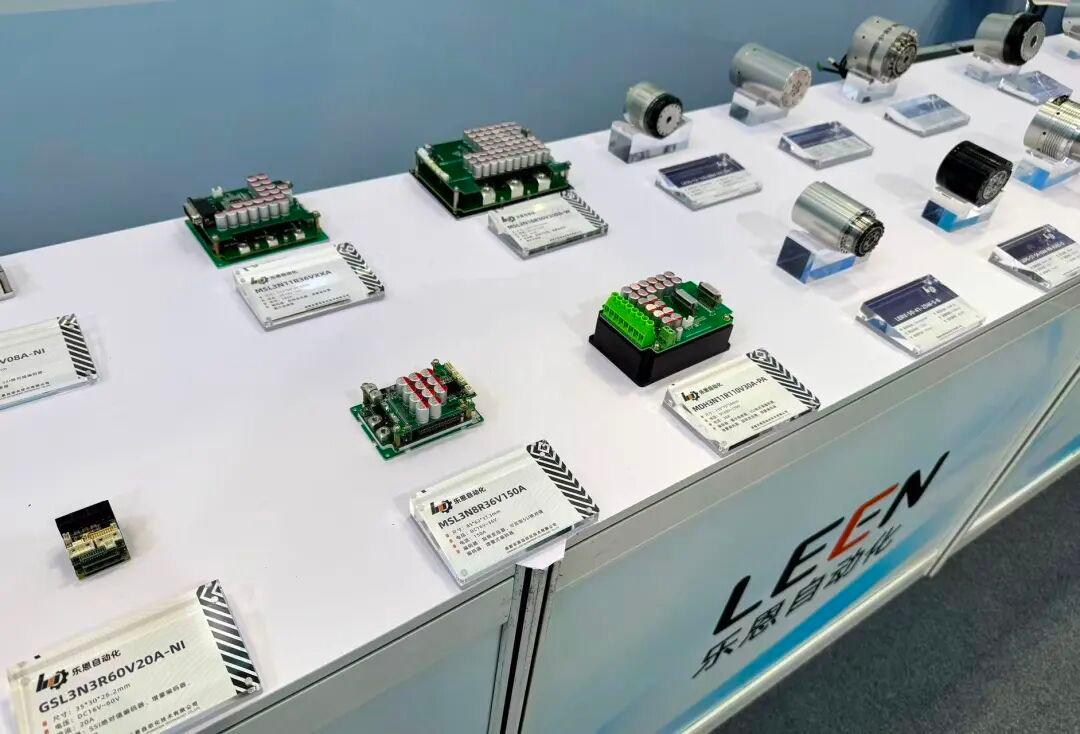
At booth C116, rows of palm-sized servo drives and finely crafted joint modules were quietly displayed. Few general visitors stopped, but industry buyers came in an endless stream. This was the “hard expertise inside robot joints” brought by Lean Automation. Many visitors may not realize that every humanoid robot moving nimbly depends on millisecond-level precision control from servo joints. Relying on its self-developed integrated drive-and-control technology, Lean Automation has achieved 100% domestic production across its hardware and software. Its products combine high precision, high power density and strong environmental adaptability, and its main models can operate stably under multiple extreme conditions. Several products provide domestic, in-place alternatives to well-known overseas brands. They are widely used in high-end manufacturing fields such as aerospace, robotics, nuclear industry, special equipment and rail transit. With self-developed servo joints at their core, they strengthen the foundation for independent and controllable domestic robots.
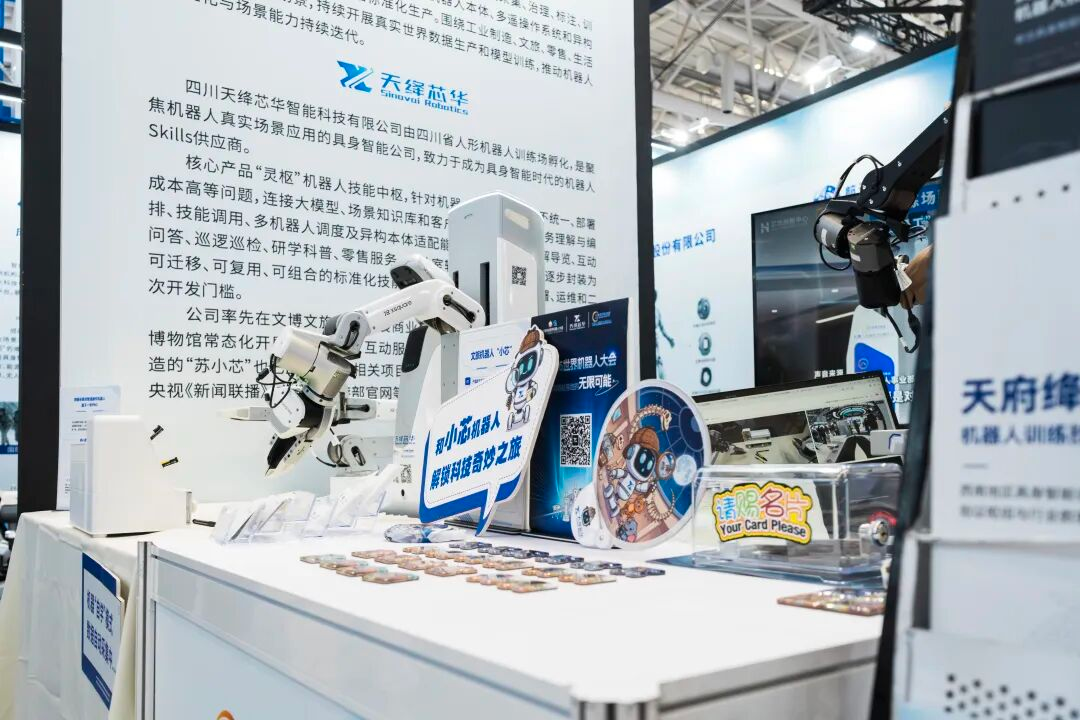
At the same booth, Tianfu Jiangxi Robot Training Center and the Tianjiang Xinhua technical team demonstrated a self-learning process for robot embodied intelligence. Staff remotely operated a dual-arm robot to complete actions; the system recorded the operation data and used AI imitation learning to distill it into reusable standardized skills. These skills were then used to empower different robot models through the “Lingshu” heterogeneous central platform, creating an embodied-intelligence training path of “coming from data and going into scenarios.” The culture-and-tourism guide robot Xiaoxin, trained through this system, has been deployed at the Chengdu Natural History Museum and the Meishan Sansu Temple Museum, serving more than 600,000 visitors in total. It has been selected as a national culture-and-tourism economy case, turning technology displayed at the booth into a tangible culture-and-tourism experience.
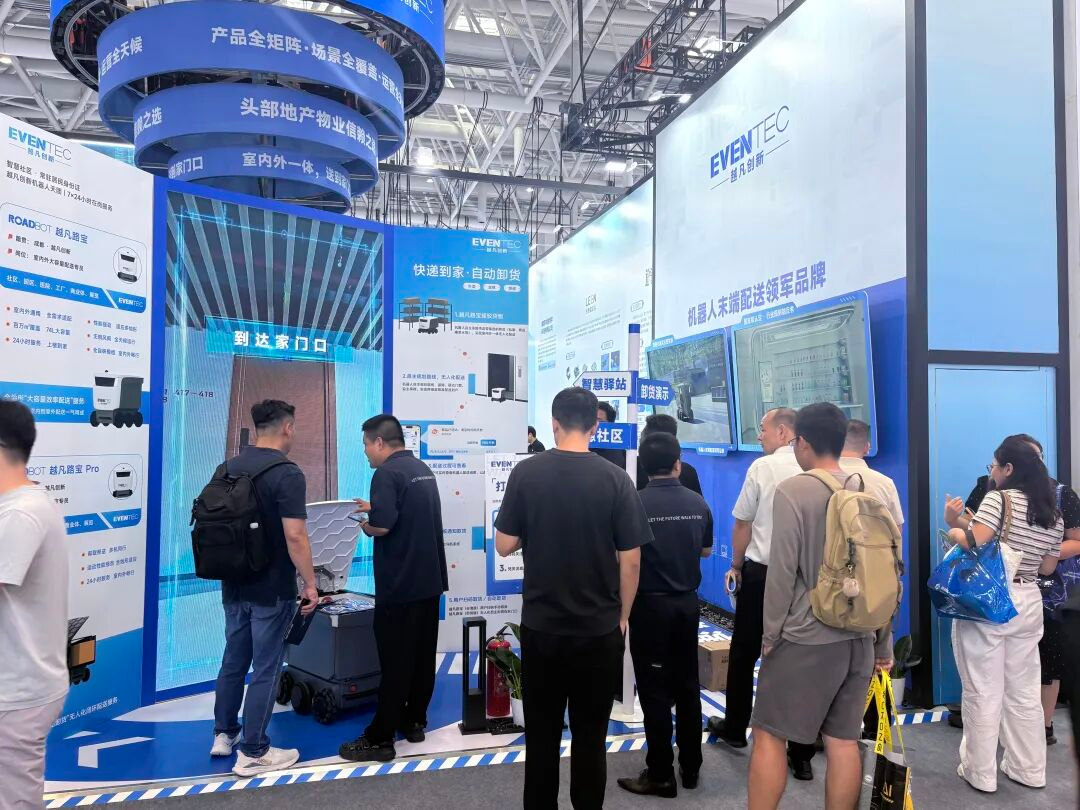
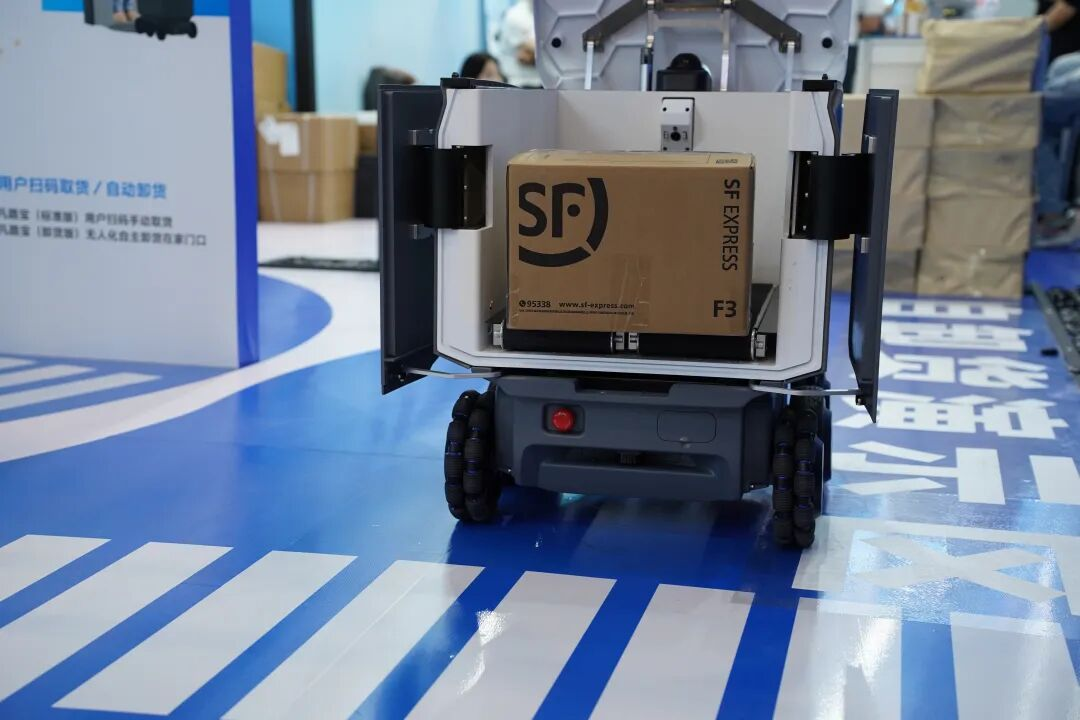
The combination of sorting and delivery robots brought by Yuefan Innovation Technology took visitors from the exhibition hall into the communities and buildings of everyday life, turning laboratory mobile algorithms into urban services operating daily in China and abroad. Yuefan Lubao, the Xiangdi series of delivery robots and PICKPAL Yuefan Smart Selection sorting robots form a complete unmanned-delivery loop: machines automatically sort goods while indoor and outdoor robots move through buildings, seamlessly connecting with elevators, turnstiles and access controls in communities and buildings. The solution has moved beyond the laboratory and been deployed in thousands of buildings across China. It also operates regularly at Singapore Changi Airport. Behind the robots’ efficient operation is a perception and scheduling algorithm adapted to complex real-world environments.
Yuefan Lubao PRO also made its debut at the conference. Building on Yuefan Lubao, the product has been upgraded with an automatic unloading function, enabling unmanned operation from the entrance of a community to a resident’s doorstep and truly delivering logistics to the home. It is now operating maturely and steadily in logistics scenarios.
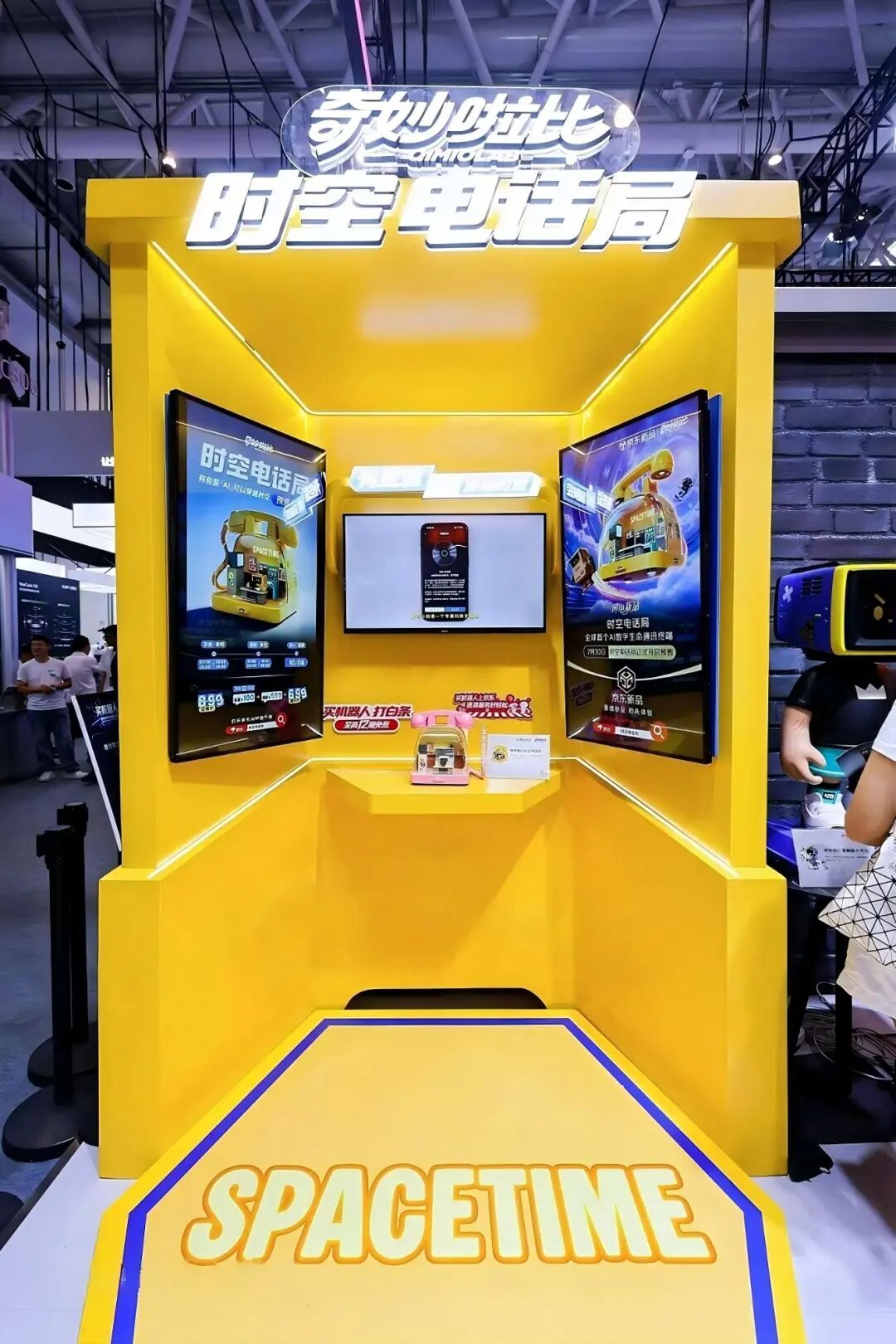
At booth C205 in the consumer area along the main passage, the atmosphere was warmer and more down-to-earth. Yinyu Quwan brought its AI toy “Regis” and “Spacetime Telephone Bureau,” the world’s first AI digital-life communications terminal, attracting many young visitors to try them. At “Spacetime Telephone Bureau,” users can pick up the receiver and talk with a customized digital character. The product moves beyond the cold interaction logic of traditional AI tools, making personality, memory and emotional companionship its core and giving smart hardware a human emotional warmth. “Embodied intelligence is not limited to industry and parks. The emotional needs of the general public are also an important track.”
A Full-Chain Ecosystem Takes Shape
Chengdu Hi-tech Zone Builds a Western China Hub for Embodied Intelligence
Competition in the robotics industry is no longer limited to impressive demonstrations at exhibition booths. The core contest is about whether technologies can take root in reality and serve the public. The collective appearance at this conference shows that Chengdu Hi-tech Zone’s embodied-intelligence sector, focused on “human-machine coexistence and the integration of industrial supply with demand,” has moved beyond the stage of conceptual display.
“Technology serves the people.” In recent years, Chengdu Hi-tech Zone has deepened its “artificial intelligence plus” initiative. Its vast number of open, real-world scenarios provide enterprises with testing grounds where they can repeatedly refine their products. The Sichuan Humanoid Robot Training Field provides a platform for real-robot testing and data accumulation. The Zhuge Space AI Ecosystem Demonstration Zone and Xinchuan Heart Robot Park continue to open real community, commercial, culture and tourism scenarios to AI and robotics enterprises.
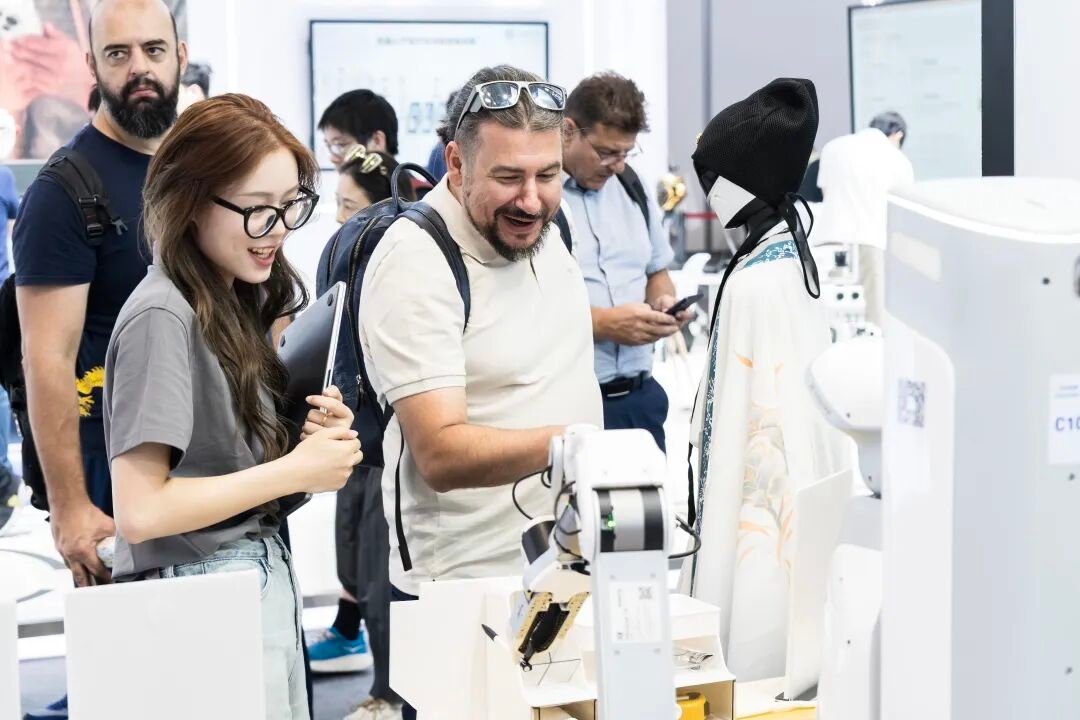
As a core platform for the National Pilot Zone for Innovation and Development of the New Generation of Artificial Intelligence and the National Pilot Zone for Innovative Applications of Artificial Intelligence, Chengdu Hi-tech Zone saw the core industry of artificial intelligence and robotics exceed RMB 90 billion in 2025. In embodied intelligence alone, it has attracted more than 60 key enterprises and built a complete industrial chain covering “core components — complete-robot manufacturing — training platforms — application scenarios — commercial consumption.”
From a precision joint to a commercial robot, and from algorithm iteration in the laboratory to proven operation in real-world scenarios in China and abroad, Chengdu Hi-tech Zone will focus on “AI plus” applications, accelerate validation and upgrades around the needs of real products and scenarios, and bring cutting-edge artificial intelligence technologies out of the laboratory and into everyday conveniences accessible to ordinary people.
扫一扫在手机打开当前页


